 Online ITPrograms
CompTIA A+ Certification: What It Takes and Where It Leads
The CompTIA A+ certification is the standard entry-level IT credential. You earn it by passing two exams, 220-1201 (Core 1) and 220-1202 (Core 2), each with up to 90 questions in 90 minutes. It leads mainly to help desk and desktop support jobs.

What the CompTIA A+ Certification Covers
The CompTIA A+ certification tests the work of an IT support specialist: setting up and fixing computers, installing operating systems, connecting devices to networks, handling basic security problems, and talking users through all of it. CompTIA is a trade association, and its exams are vendor-neutral. You are not tested on one company’s products. You are tested on how the whole job works.
The certification is split across two exams, which CompTIA calls Core 1 and Core 2. Core 1 (220-1201) covers hardware, mobile devices, networking and troubleshooting. Core 2 (220-1202) covers operating systems, security, software troubleshooting and operational procedures. Both appear on CompTIA’s own pages at comptia.org.
A+ Exam Facts
CompTIA splits A+ across two exams from the same version, and it does not allow mixing versions. Here is what each one asks of you.
| Fact | Core 1 | Core 2 |
|---|---|---|
| Exam code | 220-1201 | 220-1202 |
| Version | V15 | V15 |
| Launch date | March 25, 2025 | March 25, 2025 |
| Number of questions | Up to 90 | Up to 90 |
| Question types | Multiple choice (single and multiple response), drag-and-drop and performance-based | Multiple choice (single and multiple response), drag-and-drop and performance-based |
| Time limit | 90 minutes | 90 minutes |
| Passing score | 675 on a scale of 900 | 700 on a scale of 900 |
| Exam price (USD) | $274 | $274 |
| Recommended experience | 12 months of hands-on experience in an IT support specialist job role | 12 months of hands-on experience in an IT support specialist job role |
| Prerequisite | None required | None required |
| Stays valid for | Three years | Three years |
| Renewal | 20 CEUs and a $75 CE fee, or a CertMaster CE course, the newest exam version, or a higher CompTIA certification | 20 CEUs and a $75 CE fee, or a CertMaster CE course, the newest exam version, or a higher CompTIA certification |
| Retires | Estimated 2028 | Estimated 2028 |
Here is what you sit. Each exam has up to 90 questions and a time limit of 90 minutes. The questions mix multiple choice with performance-based items, where you work through a simulated task such as configuring a setting or diagnosing a fault.
Scoring uses a scale that tops out at 900. Core 1 needs 675 to pass and Core 2 needs 700. Because the two exams are scored separately, you can pass one and retake only the other. You don’t have to take them in a particular order, though most people take Core 1 first because the hardware material is more concrete.
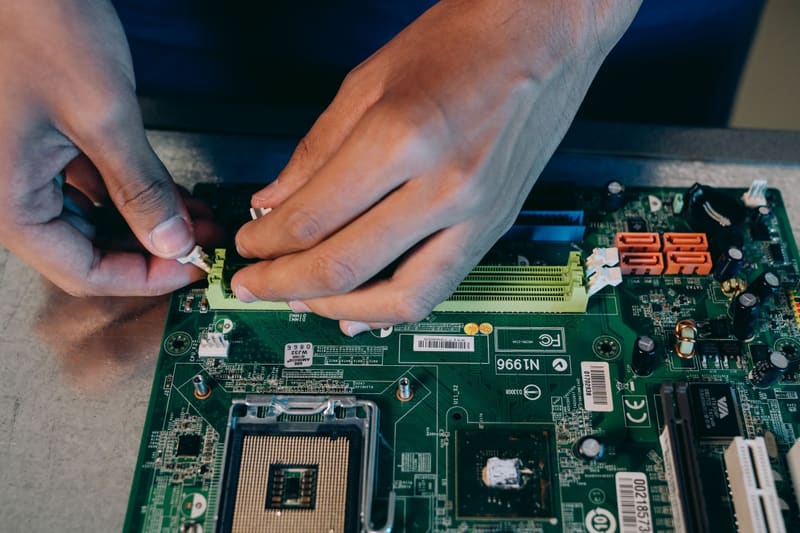
CompTIA recommends 12 months of hands-on experience in an IT support specialist job role. If you have none, close the gap yourself. Buy a cheap used desktop, open it, replace the memory, reinstall Windows, and set up a small home network. That one weekend project covers much of what the exams ask.
A+ Exam Domains
CompTIA publishes a percentage for each A+ domain, so you can see where the marks are. Troubleshooting is the single largest block on Core 1, and operating systems and security share the top spot on Core 2.
Show as a table
| Domain | Weight |
|---|---|
| Mobile devices | 13% |
| Networking | 23% |
| Hardware | 25% |
| Virtualization and cloud computing | 11% |
| Hardware and network troubleshooting | 28% |
Show as a table
| Domain | Weight |
|---|---|
| Operating systems | 28% |
| Security | 28% |
| Software troubleshooting | 23% |
| Operational procedures | 21% |
Core 1 (220-1201)
Mobile devices (13%). Installing batteries, cameras and Wi-Fi antennas, then setting up accessories over USB, Bluetooth and NFC. You also configure Wi-Fi, cellular data and sync settings and fix the connection problems that follow.
Networking (23%). Protocols, ports and wireless technologies, plus building a small office or home network with IP addressing and a VPN. Expect to know what crimpers, cable testers and Wi-Fi analyzers are for.
Hardware (25%). The physical side of the job: fitting RAM, CPUs and storage, choosing HDMI, Ethernet and USB cables, and installing printers and scanners. Motherboards, power supplies and cooling sit here as well.
Virtualization and cloud computing (11%). The smallest domain on this exam. You need to explain virtual machines, hypervisors and desktop virtualization, and tell IaaS, SaaS and PaaS apart.
Hardware and network troubleshooting (28%). The largest domain on Core 1. Given a fault, work out whether hardware, the network or a connection is to blame, using tools such as multimeters, cable testers and loopback plugs.
Core 2 (220-1202)
Operating systems (28%). Installing Windows, macOS, Linux and mobile operating systems, and managing Windows with Task Manager, Command Prompt and Disk Management. File systems, updates and upgrades are included.
Security (28%). Encryption, access controls and wireless security protocols, along with detecting, removing and preventing malware. Security carries as much weight on Core 2 as operating systems do.
Software troubleshooting (23%). Diagnosing problems with operating systems and applications, including connectivity, app and performance issues on phones, and fixing unauthorized access and malware infections.
Operational procedures (21%). How support work is run: documenting system changes, following safety protocols, communicating with users, and setting up workstation backups and recovery.
Is the CompTIA A+ Certification Hard?
It is an entry-level exam, but it is not trivial. The breadth is the problem. You need a little of everything: printers, ports, Windows commands, Linux basics, wireless standards, malware removal, backup methods. Nobody finds one topic impossible. People fail because they studied the topics they already knew.
A sensible plan is to read the official exam objectives for each exam, mark each line as solid, shaky or unknown, and spend your time on the unknowns. Take practice exams only once you have covered the objectives, and treat each wrong answer as a pointer to what to restudy. Most people who work steadily need a couple of months for both exams, though that depends entirely on how much hands-on experience you start with.
CompTIA A+ Renewal and Continuing Education
Passing is not the end. A CompTIA A+ certification lasts three years. Before it expires, you renew through CompTIA’s continuing education program, and there is more than one route.
The route most working technicians take is earning continuing education units. A+ requires 20 units, and CompTIA charges a $75 CE fee for the cycle. Units come from activities such as training courses, webinars, conferences, work experience and publishing content. If you work in IT the whole time, you may earn most of them without extra effort.
The other routes are simpler. You can complete a CertMaster CE course, which renews the certification when you finish. You can pass the latest version of the exam. Or you can earn a higher-level CompTIA certification, and CompTIA says renewing your highest-level certification renews the lower ones. That last route makes sense if you plan to take Network+ anyway, and it is why a lot of people never pay the A+ renewal fee separately.
One more detail matters if you are studying now. CompTIA estimates the current exam series will retire around 2028. When a new version replaces it, certifications you already hold stay valid until their own expiration date.
Jobs That Use A+
A+ points at support work first. The first row is the closest match, and the other two are where people usually move next, often with more certifications.
| Job | BLS median pay | Projected change, 2025-35 | Guides |
|---|---|---|---|
| Help Desk Technician | $61,860 | -3.5% | Career · Salary |
| Network Support Specialist | $76,220 | +1.2% | Career · Salary |
| Network and Computer Systems Administrator | $99,130 | -4.1% | Career · Salary |
Pay: BLS Occupational Employment and Wage Statistics, May 2025. Outlook: BLS Employment Projections, 2025-35. Job titles are matched to the closest BLS occupation.
The CompTIA A+ certification points most directly at help desk and desktop support roles. In BLS terms that is Computer User Support Specialists (SOC 15-1232). The median pay is $61,860 a year, or $29.74 an hour. The bottom 10% earn $40,980 and the top 10% earn $100,540. There are 717,190 people employed in the occupation.
Read that outlook carefully. The BLS projects this occupation to change by -3.5% over 2025 to 2035, so employment is expected to shrink slightly. It still expects about 39,700 openings each year, because the occupation is large and people constantly move into other roles. There are jobs, but you should treat help desk as a starting point and plan your next step early. The help desk technician career page and the help desk salary page cover pay and daily work in more detail.
A+ also feeds into network support. Computer Network Support Specialists (SOC 15-1231) earn a median of $76,220, and the BLS lists associate's degree as the typical entry education. Network and Computer Systems Administrators (SOC 15-1244) earn a median of $99,130. That single BLS code covers both network administrators and systems administrators. Reaching it normally takes more than A+.
Where A+ Fits
A+ is the first step on both paths below. Network+ follows it whichever direction you go, and the paths split after that.
What to Take After CompTIA A+
The usual next certification for people who want networking is CompTIA Network+, and after that Cisco CCNA. For security, the next step is Network+ and then CompTIA Security+, since security roles expect networking knowledge. Our certifications overview lays out the paths side by side.
If you want to go beyond the first rung of the ladder, remember what the BLS says about the higher-paying jobs. Network administration lists bachelor's degree as typical entry education. That is where a degree starts to matter more than another certification, and where our online IT degrees with certifications ranking can help you compare programs that build exam prep into the coursework.
Should You Take CompTIA A+ Before or During a Degree?
If you are starting an IT degree, taking the CompTIA A+ certification during your first year is a smart move. It gets you eligible for part-time help desk work while you study, and that work counts as the experience employers want after graduation. Some degree programs even teach to the A+ objectives, so you may be studying the material anyway.
If you already hold a degree in an unrelated field, A+ is a fast way to show employers you can do the practical side of IT. Pair it with a few projects you can describe in an interview, such as a home lab or a volunteer support job for a small nonprofit.
The one case where A+ is optional is if you are already working in IT support and have two or more years of experience. At that point, Network+ or a specialty certification may do more for you, and your experience speaks for itself.
CompTIA A+ Preparation Tips That Work
Use more than one study source. The official objectives list exactly what is tested, so build your notes from them. Pair a video course or textbook with hands-on time, and do not rely on practice questions alone, because performance-based items reward people who have actually done the task.
Keep a short list of command-line tools and where they apply, since they come up on Core 2. Learn the common port numbers and wireless standards by repetition. And schedule the exam before you feel completely ready, because a date on the calendar keeps study from drifting.
Degrees That Build A+ In
These degrees name A+ on their own program pages, either as an exam the coursework lines up with or as a voucher the school pays for. 17 programs in our online IT degrees with certifications ranking name A+, and the top 8 are shown here.
- CCHTBachelor of Science in Computer NetworkingCoursework lines up with the exam
- MyComputerCareerIT Network Administration and Security, AASCoursework lines up with the exam
- WUSTBachelor of Science in Information TechnologyCoursework lines up with the exam
- MTI CollegeInformation Technology, ASExam voucher included
- Ivy TechCloud Technologies, AASCoursework lines up with the exam
- Bismarck StateCybersecurity and Computer Networks, AASCoursework lines up with the exam
- CapellaIT: Information Assurance and Cybersecurity, BSExam cost included
- Richmond CCInformation Technology, AASCoursework lines up with the exam
Those programs also appear on these rankings: Best Online IT Degrees with Built-In Certifications (17), Best Online IT Associate Degrees (8), Best Online IT Degrees at NSA-Designated Schools (8), Best Online IT Bachelor's Degrees (6), Best Online Networking and Network Administration Degrees (6), Best Online Cybersecurity Degrees (3), Cheapest Online IT Degrees (3), Best ABET-Accredited Online IT Degrees (1).
A+ Cost vs a College Course
Because A+ takes two exams, it costs more up front than any other certification we cover. It is also the cheapest of the three CompTIA credentials here to renew through continuing education.
| Item | Cost (USD) |
|---|---|
| Both exams | $548 |
| Renewal, every three years | $75 CE fee |
| One credit, median undergraduate rate | $410 |
| One 3-credit course at that rate | $1,230 |
CompTIA A+ costs $548 in exam fees, which is 45% of one 3-credit course at the median undergraduate rate in our programs. The $75 continuing education fee covers each three-year cycle. We leave study materials out of this comparison because their cost depends on what you buy.
The median covers 83 associate and bachelor's programs in our rankings with a published per-credit rate, using the out-of-state rate where a school charges two. Quarter-credit programs are excluded.
Is the CompTIA A+ Certification Worth It?
For help desk and desktop support, yes. The CompTIA A+ certification costs money for two exams, plus study material and a $75 renewal fee if you renew through continuing education, but it gives employers a clear signal that you know the basics. It is one of the few credentials that appears in entry-level postings by name.
It is worth less if you already have a few years in IT support, or if your target job is not in support at all. A+ does not impress a security team or a systems engineering team. It is a door opener for the first job, and you should plan to move beyond it.
One more honest note: the certification does not guarantee a job. The BLS projects the help desk occupation to change by -3.5% over 2025 to 2035. Competition for entry-level openings is real, so combine A+ with something that sets you apart, such as a home lab, a volunteer support role or coursework in networking and security. The IT degree vs certifications comparison on our hub page explains when to add a degree on top.
CompTIA A+ FAQ
How many exams are in the CompTIA A+ certification?
The CompTIA A+ certification takes two exams. Core 1 (220-1201) covers hardware and networking. Core 2 (220-1202) covers operating systems and security. You can take them in either order. Each has up to 90 questions and a 90 minute limit, and you need to pass both to earn the certification.
What score do you need to pass CompTIA A+?
Scores run on a scale up to 900. You need 675 to pass Core 1 and 700 to pass Core 2. The two exams have different passing scores, so a result that would pass one can fail the other. The score is scaled, so it is not a simple percentage of correct answers.
Do you need experience before taking CompTIA A+?
No formal prerequisite exists, but CompTIA recommends 12 months of hands-on experience in an IT support specialist job role. That is a guideline, not a gate. Career changers pass with study and a home practice machine they can take apart and reinstall. Hands-on time helps most with the performance-based questions, which ask you to solve a task instead of picking an answer.
How long does CompTIA A+ last and how do you renew it?
CompTIA A+ lasts three years. To renew, you earn 20 continuing education units through CompTIA's CE program and pay a $75 CE fee, or you complete a CertMaster CE course, pass the newest exam version, or earn a higher CompTIA certification. Work experience and training can count toward units.
Is CompTIA A+ worth it without a degree?
For help desk and desktop support it often is. The BLS lists some college, no degree as the typical entry education for computer user support specialists, so employers hire on certification and skill. For network administration the typical entry education is bachelor's degree, so plan on pairing A+ with more study or a degree.
How much does the CompTIA A+ exam cost?
CompTIA's US store listed each A+ voucher at $274 when we checked, and you need two, so the certification costs $548 in exam fees. Retake bundles and study products cost more. Prices change, so confirm the figure in the store before you buy.
How do you get CompTIA A+ certification?
Pass both 220-1201 and 220-1202 from the same exam version. CompTIA does not allow mixing versions. Buy a voucher for each exam, schedule through CompTIA, and take them in whichever order suits you. There is no application and no required course.
How hard is the CompTIA A+ exam?
It is entry level, but wide. Hardware and network troubleshooting is the largest Core 1 domain at 28%, while operating systems and security each take 28% of Core 2. Most people who struggle studied only the topics they already knew, so work from the official objectives.
Keep researching
Related Rankings and Guides
Sources
- CompTIA A+ Core 1 (V15) exam page Checked November 2, 2026.
- CompTIA A+ Core 2 (V15) exam page Checked November 2, 2026.
- CompTIA Continuing Education Program FAQ Checked November 2, 2026.
- CompTIA, Earn Continuing Education Units Checked November 2, 2026.
- CompTIA, Continuing Education Renewal Fees Checked November 2, 2026.
- BLS Occupational Employment and Wage Statistics Median pay for each IT occupation.
- BLS Employment Projections Projected change for each occupation, 2025-35.
- CompTIA A+ certification page